 Empowering Independence
Helping children develop the skills they need for everyday life — from school readiness and fine motor skills to sensory processing and self-care.
Occupational Therapy (OT) focuses on helping children develop the skills they need to participate fully and independently in the activities of daily life. For children, these "occupations" include play, self-care (dressing, feeding, hygiene), handwriting, school tasks, and social interaction.
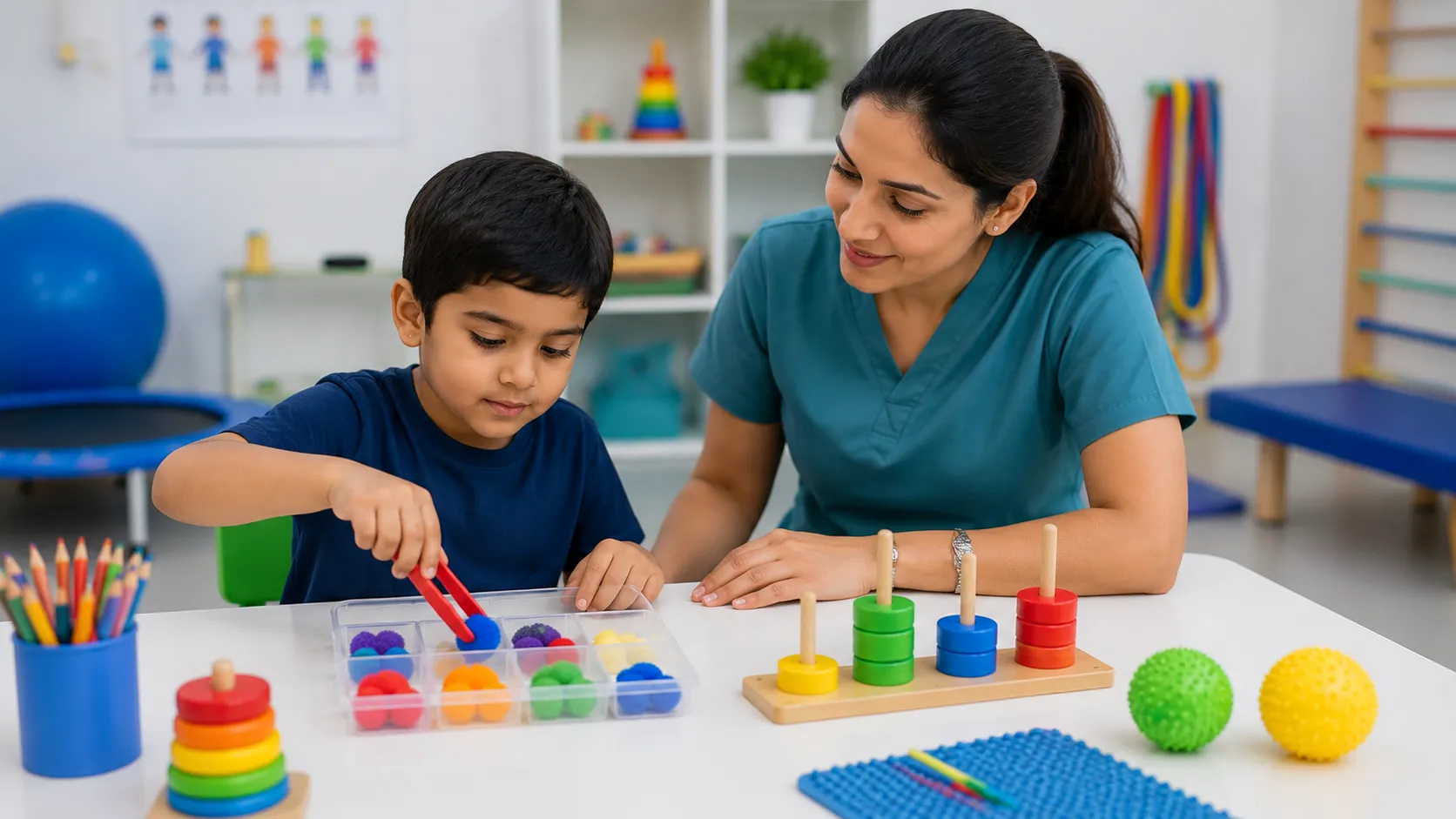
Our certified occupational therapists use a range of evidence-based techniques to assess and address difficulties with fine motor skills, gross motor coordination, sensory processing, visual-motor integration, and adaptive behaviour — creating a therapy programme as unique as your child.
Difficulty with pencil grip, handwriting, cutting with scissors, buttoning clothes, or tasks requiring precise hand and finger coordination.
Over- or under-sensitivity to touch, sound, movement, taste, or smell that affects daily functioning, behaviour, and participation.
Clumsiness, poor balance, difficulty learning new motor tasks, or coordination challenges affecting school and physical activities.
Difficulty with age-appropriate self-care activities such as dressing, feeding, personal hygiene, and basic household tasks.
Difficulties with attention, posture at a desk, pencil control, scissors use, or other skills foundational to classroom participation.
Supporting children on the autism spectrum with sensory regulation, daily routines, visual supports, and functional skill development.
We begin with a conversation about your concerns and observe your child in a relaxed, play-based setting.
Using validated paediatric OT assessments, we evaluate fine motor skills, sensory processing, visual-motor integration, and daily living skills.
Together we set meaningful, functional goals — things that will make a real difference to your child's daily life and independence.
Sessions use play-based activities, sensory equipment, purposeful tasks, and skill-building exercises tailored to your child's goals.
Practical home strategies and parent coaching to build OT skills into daily routines for faster, more lasting progress.